
Magda Dereń
—
08.01.2026
Volunteering as an antidote to burnout
Have you also come across many articles lately stating that the younger generation, Gen Z, is experiencing burnout more frequently? Why does it happen?
Have you also stumbled across many articles lately saying that the younger generation, Gen-Z (it’s hard for me to admit, but I am slightly too old to be called a Gen-Zer; however, I do identify as one with many beliefs, does it make me one?), is experiencing burnout more often? The phenomenon, which used to describe only people aged 30-40 with many years of professional work experience, now often affects people aged 16-25. Why does it happen? There could be many reasons, usually due to: educational pressure, a sense of disorientation, and the use of social media (and our constant comparison with others on these platforms).
Mobility and volunteering (especially the combination of the two, such as volunteering abroad through the European Solidarity Corps) provide a totally different stimulus: a sense of community, a feeling of purpose or meaning, and a sense of accountability.
Accountability is an important word. I remember going for Erasmus + Training Course (a programme mostly addressed to youth workers, to make them develop some skills later needed in work with youth, founded by Erasmus +) where the trainers spoke a lot to us about that word. They said we are afraid of it. When we want to achieve something, but we meet an obstacle, this obstacle becomes our excuse not to achieve that goal. We are running away from accountability, instead of taking life into our own hands and starting to act. Volunteering actually teaches you to start acting. It teaches you accountability. So by doing so, you are not only helping others, but you are also helping yourself.
Why do we, as young people, feel burnout?
We stayed at home during the years of COVID (I know some great people whose Erasmus University exchange or ESC was cancelled due to COVID-19 restrictions! Or after 1-2 weeks of the mobility, they were sent home. I am so sorry!). It made us feel lonelier. The global pandemic made us feel like we cannot control anything, that no matter how we try, sometimes we cannot influence things that happen. Social media makes us compare each other; we feel like we are missing out every time we see someone’s cheerful stories. We do not have time to explore our true, authentic selves, because we keep comparing ourselves! (btw, I have been to a great Erasmus + Training Course, organised by Vulcanicamente near Lecce, in Italy, where we tried to explore our true selves. Highly recommended!). We are constantly “performing” online and offline. Mobilities allow you to be yourself, without judgment. (PS If you want to be more offline, you can sometimes find youth exchanges offering you a digital detox, you are encouraged to switch off your mobile devices for the whole week of the project. I haven’t been to the detox myself, but I know people who did, and they truly recommend it!)
Why does volunteering work as an antidote?
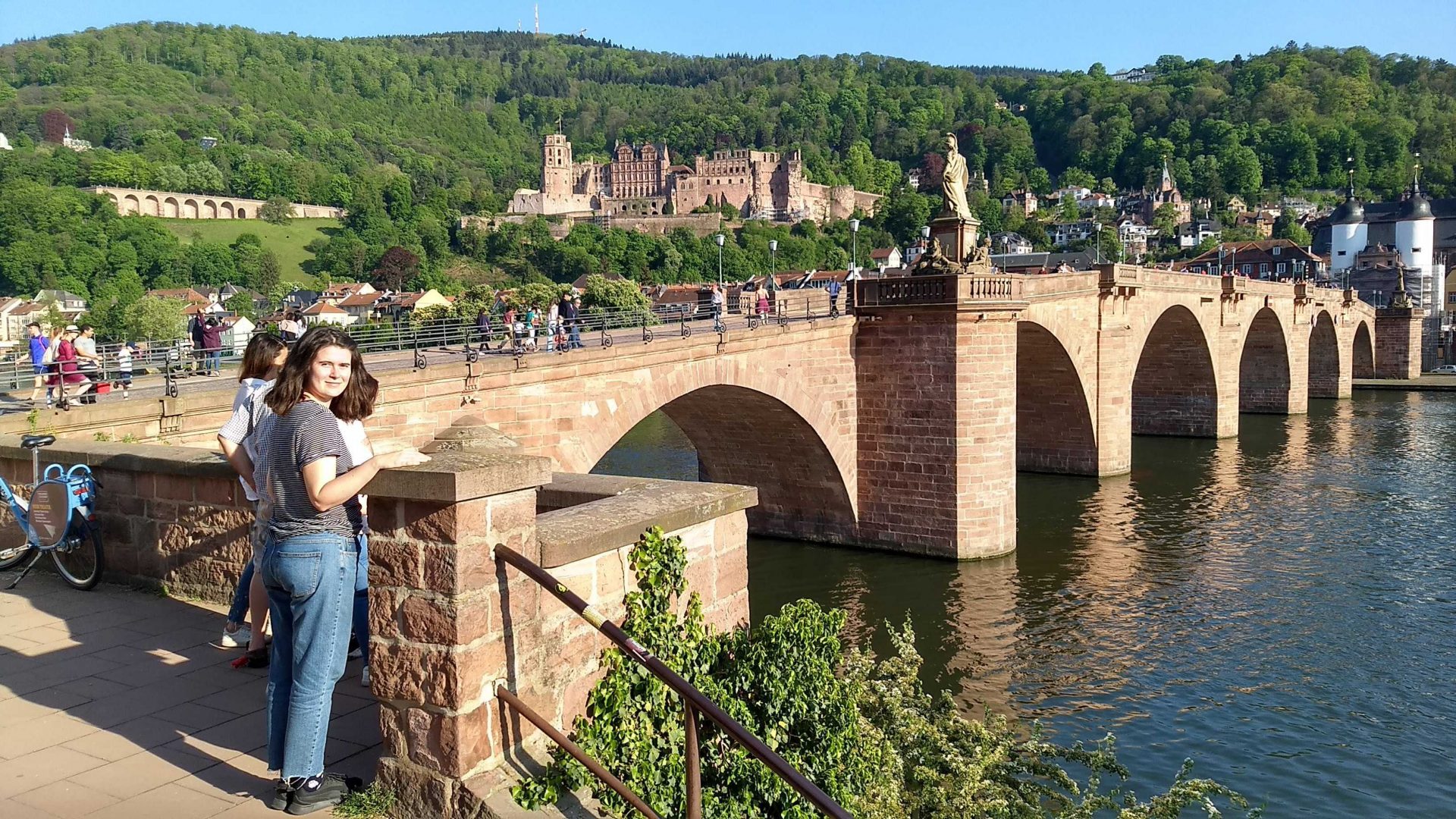
Because it is impactful work where you can truly see the results. I worked at the Don-Bosco-Berufsschule in Würzburg (northern Bavaria) as an assistant teacher in two refugee classes. One group consisted of people who had just arrived in Germany and needed intensive language training; the other included students at an A2 level or higher, striving to reach B2 to enter the regular German school system. Beyond language, they were learning basic maths, history, and social sciences to ensure a better start in their new lives. The effects of my work were incredibly tangible – the satisfaction of seeing a student finally solve a math problem was immense! It might sound cliché, but after hearing so many survival stories – stories of how my students fled their home countries – it really makes you think. It makes you realize that some of the problems we face are actually quite small, and we should be grateful to be born in places where food, heating, and clean water are a given. It gives you perspective. It gives you the feeling that what you are doing right now truly makes a difference.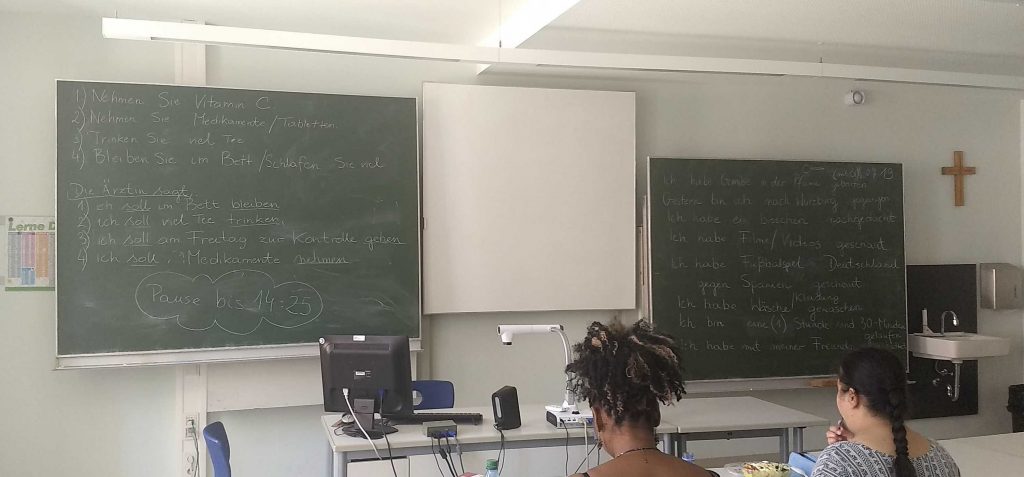
Moreover, you get to connect with amazing people. We are in an epidemic of loneliness. Many feel lonely, even when surrounded by people. It’s because the contact with others is quite often on a very surface level or often happening just online. When I was taking part in a theatre dance project in Kraków, called Mirror Neurons (Spiegelneuronen from a dance theatre in Berlin), I remember they were playing in the background a sentence said by one of the specialists onthe human brain saying that we suffer from subjective loneliness, so you can meet many people, but you do not connect with them. Feeling subjective loneliness can influence even how long you are gonna live! During the European Solidarity Corps, I had a chance to meet and really connect with other volunteers from many different countries.
Why is it easier? Since you already have quite a lot in common, you definitely share similar values. Not everyone decides to spend one year abroad helping others, to hit a pause button and not go straight into well-paid jobs with a future, as some of our parents are telling us to do. Being around people who have decided to do the same as you, makes you really close. You see, that you are not the only “strange one” going volunteering. You are surrounded by people who make similar life decisions.
A new country gives you a mental restart. You have to leave your country, your old routine. It’s challenging sometimes, but it makes you leave the state of stagnation. You have to learn a new culture, new rules to fit in. New experience also activates your dopamine and serotonin.
You can test a different side of you! In your environment, in class, at work, in your family, we often have a certain role, stereotype label, how the people see us and describe us. She is the quiet one. He is the chaotic one. They are the diligent ones. We do not like them sometimes, we want to revolt against them. But it’s easier to do it in a new environment. You do not like that people think you are quiet one, but deep inside you know it’s only because you did not find them interesting enough to talk to? You want to change that and prove to yourself, you can? Volunteering at ESC is a perfect environment for this development!
Why is mobility a safe environment to get your energy back?
It’s all done in a non-formal education way. You learn by doing things. There is no formal assessment (however, your volunteer work progress is checked with your mentor), you do not study for the tests, you do not sit in the class (well, technically, I ,as an assisting teacher, kind of did!). You were not recruited there as a professional, but as a volunteer who is even expected to learn and make mistakes – it’s a part of your learning process! During your long-term volunteering, you will meet twice, both times for one week, for an on-arrival and mid-term training. Iit will be a good chance for you to meet other volunteers who are doing this programme in other parts of the country. It’s a space to exchange your experiences, to sometimes learn that others are also confused about what they are doing. The trainers during these meetings make sure it’s all done in the atmosphere of safety and acceptance. I remember I shared with them some of my doubts as well (I didn’t understand what the point of some tasks I was given at work, for me it was only done so that I work full hours, but it did not impact anything else than my schedule).
How does volunteering help?
As said two paragraphs ago, long-term mobility is a great chance to discover a new you without judgment. Do you think you are introverted? It will help build your self-esteem! Are you stressed? It will reduce your tension. You feel like you are too perfectionist? Many things during volunteering will not go as planned, but it will teach you to be more chill and accept the mistakes! You feel like you did not travel well enough? Do you live in a small town? It will open you up for new countries and cultures, friendships you make there will make it possible for you to travel Europe and visit your friends in the next years! You feel tired? It will give you new energy!
How can we, the Europeers, help?
Join us during one of our on-site events, webinars, job fairs. Hear our stories on how we got our energy back. Reach out to us before you go for a project, ask for advice, we are always happy to help! Check out if the country you are going to also has an Europeers network. When I was doing my European Solidarity Corps in Germany, I was not aware that Germany has one of the biggest Europeers networks. It would have been much easier for me to if I had known there is a person in a network I can reach out to and talk, discuss my project with. You just came back from the project and got so called post-project blues? Reach out to us or… join our network and help the next generation of volunteers!
Do you need a change? Volunteering gives you this straight away!
Volunteering teaches us what the normal educational system is missing; it teaches us a sense of community, accountability, and being an authentic self. After the project, you will come back being more self-aware of your own needs and barriers (even maybe non-negotiables?). I remember after working for one year in a German school, being surrounded by people, I knew my next work in Poland needs to be around people too, in a positive environment. I also learned about myself that after 8 hours of work I liked to come back home, have energy to meet friends and go for a trip during weekend. I didn’t need to prepare for work during my free time, I discovered I need that work-life separation and was seeking for jobs, who would give me that.
By going for a project you not only change the community around you, but you also change yourself.
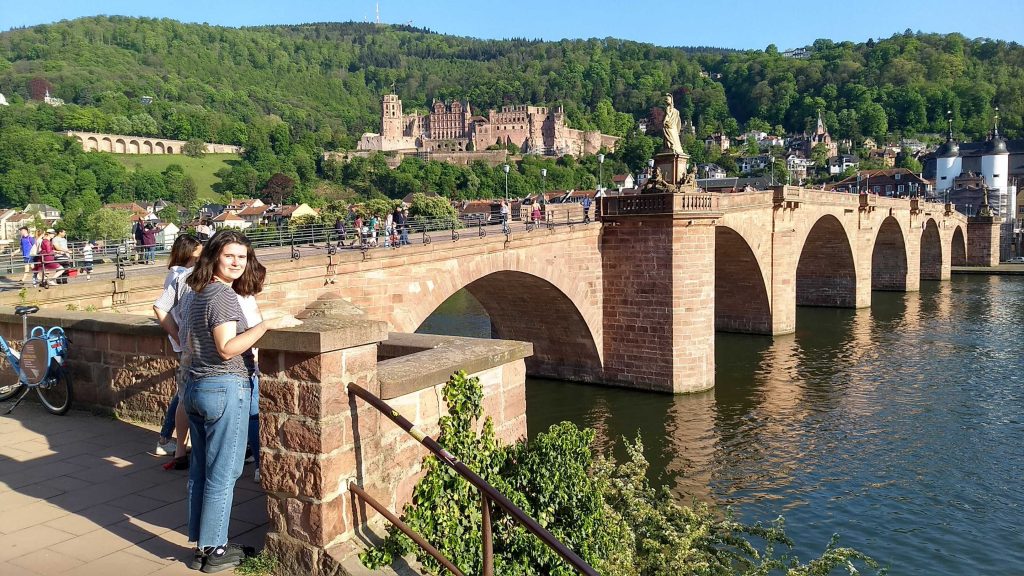 Hi, I am Magda, a member of Europeers Poland since April 2022. Some of you may have met me during international training in Brussels the same month, and some of you might know me from the Annual Network Meeting in Riga.