
Magda Dereń
—
04.12.2025
From ‘Analysis Paralysis’ to Action: How my ESC Volunteering Cured My ‘What Next?’ Panic
Happy International Volunteer Day tomorrow! For this occasion, I wanted to share with you some of my thoughts about volunteering and why it's life-changing!
I didn’t realise that Erasmus+ was more than just a university exchange for a long while. I actually hesitated a lot to even go to that exchange, since in my mind I only associated it with parties and Erasmus babies (which is a fact, the EU is actually proud of the ‘Erasmus Baby’ phenomenon, but finally I did during my last year of master’s studies. I chose Ljubljana, Slovenia, an excellent choice, especially for a foodie like me (they have student coupons, which allow students to go to almost any restaurant, buy a meal, salad, dessert, or soup for not more than 5 euros [at that time], and the rest is subsidised by the government).
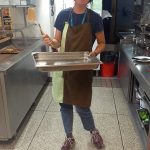
And after that amazing experience, I realised that I regretted doing it so late. Then, I panicked; it was my last year of master’s studies, I had just tasted living abroad during Erasmus+, and I realised I may never have the same opportunity again. Moreover, even though I found my studies incredibly interesting (I studied law), I did not really see myself as the one pursuing the traditional law graduate path: studies, and a couple of years-long training to become a law advisor, barrister, judge or prosecutor. I knew I loved languages, travelling, and being with interesting people. I decided to give myself a year, a GAP year, as people say. I found a cool volunteering opportunity (not a part of European Solidarity Corps [later referred as ESC], I still did not know what that is) in La Salette, in French Alps (just saw a friend of a friend posting about it on FB), where there were 60 volunteers at the same time in Holy Mary sanctuary (though, the volunteering didnt require from you to be religious or having a certain faith) doing different services like helping in laundry, doing the dishwashing. I worked in a snack bar (thanks to that, I still know how to say fries, salad, sausage in French) and met many amazing volunteers, almost ⅓ of them from Poland, actually. (You can find a photo of my mastering snack-baring at the bottom of this article). One of them, Ewa, exposed me to the European Solidarity Corps (then still called EVS), she studied law as well, and same as me, didn’t want to pursue the typical career. She decided to go to France for one year, and said that this year really changed her life. Thanks to that, she also spoke perfect French. I wanted to try it out! I really wanted to master my second foreign language – German, which I studied a lot in the afternoons during studies, but I felt like I didn’t really have time to speak it enough. At that time, I was considering going into a diplomatic path, considering doing the test for diplomatic training, and for that, you need to know two foreign languages. Volunteering abroad seemed like a perfect opportunity to gain some foreign work experience + to perfect another foreign language (I wouldn’t be wrong, after that year I was applying for jobs in Krakow, Poland, while still in Germany, and it was extremely easy to find a cool job for me, based just on my German skills). Isn’t it a serendipitous coincidence? You decide to make the brave move of skipping legal training, you choose a unique volunteering opportunity, and you meet someone with a similar story who recommends the ESC. After all, they say, there are no coincidences in life, just signs.
I remember on one of the Polish Europeers meetups, as one of the ice breakers, we had to answer in pairs to a question ‘what’s the decision you made in life, you are the most proud of’, I easily answered: going to ESC after finishing my studies.
I’m writing this all because I know it’s a common problem, there are so many possibilities these days, so many interesting degrees we can study, different career paths, opportunities that we are scared of making a bad choice. Some people say that its like in a supermarket, we used to have one kind of bread, so everyone was buying the same bread and was happy, now in every shop we have 20 different kinds, it makes us stop in that aisle way longer, think which one of the breads I would prefer today and sometimes, at the end, we leave the shop without buying any, because we simply couldnt make that decision. We get that Analysis Paralysis. Same with career choices, there are so many opportunities, we sometimes simply do nothing. We do not go to study; we take a gap year after graduating, simply because we do not know which career path actually interests us. I was the same after my studies; I was interested in so many things that I actually did not know what to pursue.
How did ESC change that? ESC is a bit like a ‘decision laboratory’. Instead of just thinking, what you should do next, it allows you to check it in practice, in a safe environment (after all, you are a volunteer, not a high-level senior strategic professional of senior stuff, so it’s understandable you do not know some things, and very likely you will make many mistakes during your volunteering).
Why did I call going for volunteering ‘a brave thing’ 3 paragraphs ago? Since we still have to fight with the prejudice that spending one year abroad doing something which is not particularly connected with what you studied, what you did at work, or what you were planning to do later in your professional future, is a ‘break’ or ‘escape’ from reality. I know myself, my grandma didn’t understand the whole concept, when I was explaining it to her, so later my father told her that actually I work in the office in Germany, dealing with European funds (I was actually working in Berufsschule in two classes with refugees). On another occasion, after volunteering in France, I did an internship in Warsaw, in a governmental office and said to one of my colleagues that I have a volunteering opportunity for one year booked after that, they said, ‘Why does Germany need any volunteers?’ For them, you do volunteering only if you cannot find a paid job and need some professional experience. And in Germany, you could find plenty of jobs to their understanding.
So obviously, there are still many misconceptions about volunteering abroad for a longer period of time. Europeers are also trying to change that. Of course, it’s not a rule. As said, it was easy for me to get a good job back in Poland after volunteering, even though it was completely unrelated to what I was doing in Bavaria. My German language helped a lot, but what counted in my recruitment process was also my adaptability, flexibility, ease of getting into new, foreign environments, meeting new people and finding all that dynamic change exciting. This experience definitely boosted my soft skills, so needed in the job market.
You may say, there are so many volunteering opportunities available on Youth Portal (official portal where you create your own profile, which functions a bit like ‘Linkedin for volunteers’ as I like to say: you can find volunteering opportunities and send your applications, but if you set your profile to visible – other organisations may find you and reach out to you first! – That’s how my organisation in Germany found me. How to choose a suitable one? Especially since you can do long-term only once? Try to set your priorities, for me it was: to improve my 2nd foreign language and make it C1, to work in school (I am coming from a teachers’ family, so it felt familiar to me), and work with refugees (which I wouldn’t have a chance to do without any experience in Poland). Choose an option which speaks most to you and just do it! Doing things brings you clarity
So, if you are currently standing in that metaphorical supermarket aisle, staring at twenty different types of bread and feeling that familiar panic rising, take a breath. It’s okay not to know exactly which ‘loaf’ you want for the rest of your life. The European Solidarity Corps offers you the chance to just pick one, taste it, and see if you like it – without the risk. Don’t let the analysis paralysis freeze you. As I learned, clarity doesn’t come from thinking; it comes from doing. Apply, pack your bags, and go find your own clarity.