17.03.2026
EuroPeers featured in Special report on youth engagement in Europe
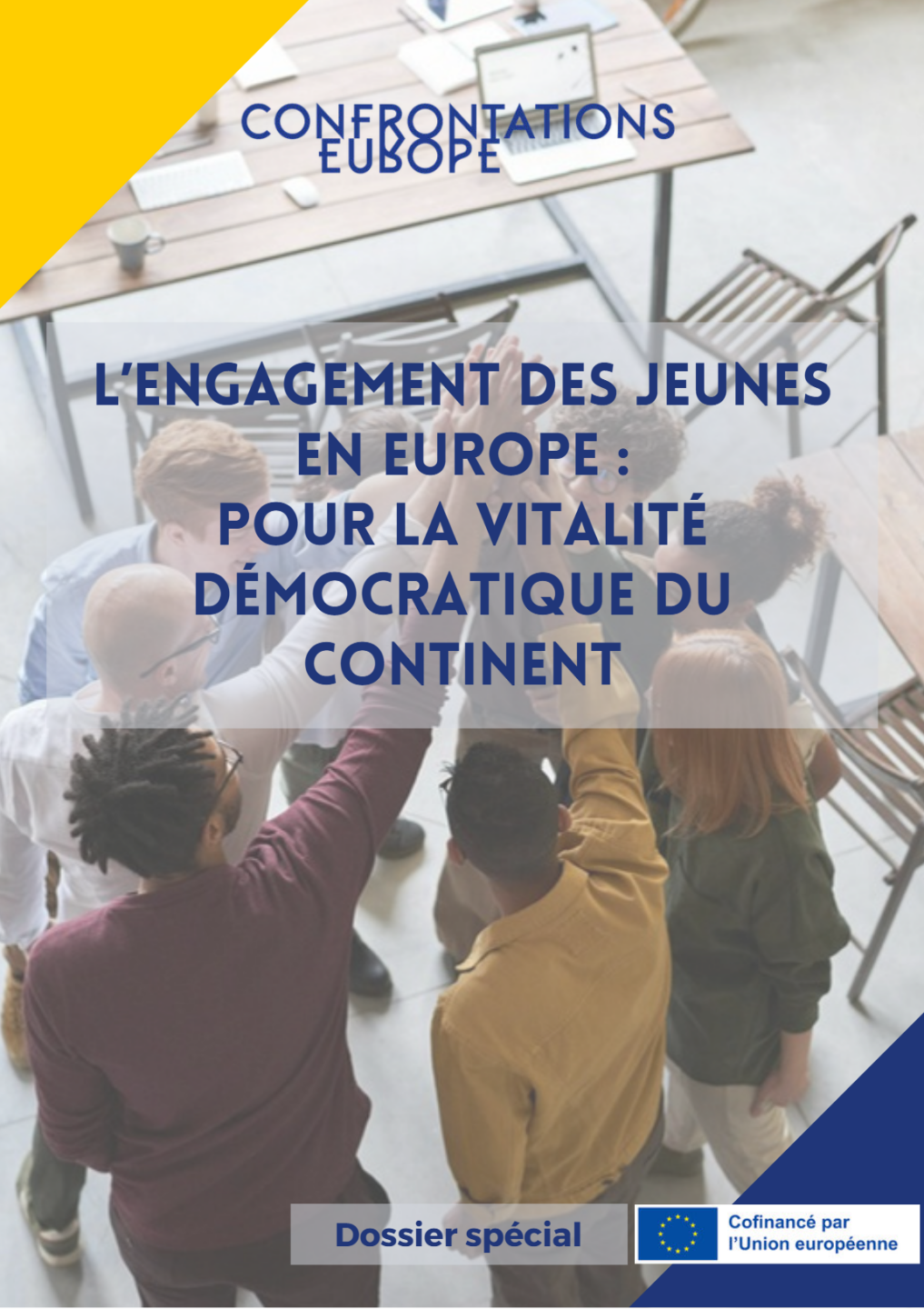
Prestigious Think Tank “Confrontations Europe” has published a special edition on active youth engagement in Europe through youth programs to promote mobility, participation and a sense of belonging. Inside, a special feature by EuroPeers to provide a strong case study of active engagement on the local level: with social, environmental and intergenerational initiatives, to transform mobility into tangible engagement to strenghten social cohesion and innovate democratically. Read below the full article in English.
From a German pilot to a European alumni movement: how EuroPeers turns experience into engagement
In 2005, when the European Commission announced European Youth Week, the German National Agency made a counter-intuitive choice. Instead of concentrating energy into one flagship event, it invited young alumni of EU youth programmes to create many small, local actions. More than 100 young people took part in preparatory training and then organised over 100 different events across Germany—decentralised, peer-led, and close to everyday youth realities. The concept was simple: if the goal is to reach young people, let young people reach their peers.
A year later, something even more important happened. At the evaluation meeting, a large share of participants returned—around 60%—and many asked to continue. The peer-to-peer approach had become more than a one-off campaign; it had become a community. That moment is often described as the birth of EuroPeers: an alumni network of young people motivated to share authentic experiences from Erasmus+ Youth (and later the European Solidarity Corps) and to encourage others to participate.
Between 2006 and 2014, the network matured through practice. The core method remained the same—young people sharing experience directly with other young people—but the infrastructure around it grew: annual meetings, regular training in storytelling, public speaking and project management, and practical support for youth-led activities. The EuroPeers Network Guide describes this period as one of “expansion and refinement”, driven by shared enthusiasm and gradually clearer identity and structure.
Internationalisation also started organically. By 2010, Austria and Switzerland were involved in training sessions; in 2011 the first German-speaking international training course took place in Luxembourg. Small peer projects began to appear elsewhere too, while similar initiatives existed under different names in other countries. The early lesson was pragmatic: the idea travels well, but it needs translation into national youth realities and communication cultures.
In 2014, a strategic planning meeting helped translate this organic growth into a clearer European ambition. Six countries—Germany, Poland, Austria, Estonia, Norway and Belgium—collaborated to establish an international structure. In 2015, Berlin hosted a milestone format: National Agency representatives met in parallel with the EuroPeers annual meeting, and this collaborative model became a yearly routine. The Guide also notes an important spill-over effect: in 2017, the EuroPeers concept inspired the creation of EuroApprentices in vocational education, closely modelled on EuroPeers’ training concepts.
A further step toward stability came in 2020 with the formalisation of a strategic partnership led by the Estonian National Agency. The Long-Term Activity (LTA) launched in 2021, aiming to strengthen coherence and capacity: a dedicated network coordinator, clearer work planning, improved digital presence, and a stronger focus on inclusion—especially reaching young people with fewer opportunities. The Guide links this phase to shared training materials, a renewed visual identity, and the launch of the international website and Instagram presence.
Today, EuroPeers operates as a transnational alumni community with a combined structure: central coordination for coherence, national ownership for relevance. As of 2025, the network functions as an LTA led by Estonia and involves fourteen active countries, each with its own national coordinator(s) and EuroPeers group.
This “hybrid” design matters. It keeps the network recognisable across Europe (shared values, shared training logic, shared identity) while allowing each country to organise EuroPeers in ways that fit local youth work traditions, school systems, geography, and programme landscapes.
What EuroPeers is—and why it matters now
The EuroPeers website defines the project in practical terms: EuroPeers are young people with experience in Erasmus+ Youth or the European Solidarity Corps who want to pass on that experience to others. They go to schools, youth clubs and public spaces; they run workshops, school presentations, street actions and exhibitions; they share stories online; and they provide accessible information about mobility and participation opportunities.
This clarity matters because many debates about youth engagement still start from the wrong diagnosis. Too often, youth disengagement is framed as a lack of interest or a “generation problem”. What practitioners and young people describe, again and again, is different: information is hard to navigate; institutions feel distant; and participation is invited too late to feel meaningful.
The 11th Cycle consultations of the European Youth Dialogue in Estonia capture this tension well. Young people value European identity, democracy, equality and freedom, but they also describe shortcomings in how these values translate into everyday life—especially around equality, minority rights, and being heard in decision-making. They link trust and engagement closely to understandable information and meaningful involvement; they often experience official information as too jargon-heavy and not youth-friendly, and many say they need more guidance and mentoring to access opportunities such as Erasmus+—particularly in rural areas.
EuroPeers sits exactly at this conversion point. It helps transform abstract opportunities into something concrete and socially credible, because the messenger is not “the institution” but a peer with lived experience—someone who can answer the questions young people actually ask (“What was it really like?”, “Would I fit in?”, “How did you apply?”) in everyday language. In practice, EuroPeers does not just distribute information; it reduces uncertainty and lowers the psychological threshold of participation—two factors that often matter more than motivation itself.
Peer-to-peer as a strategy, not a slogan
The evidence from national inputs collected from EuroPeers coordinators and partners is strikingly consistent: peer-to-peer works because it reduces distance—social, cultural, and psychological.
In Latvia, colleagues describe that young people become much more engaged when information is shared peer-to-peer, informally and through real-life examples—especially in schools, youth centres, and youth-initiated events. They also name familiar barriers: many young people are not aware of EU youth opportunities or perceive them as complicated and “not meant for them”; young people outside Riga have less direct access to information and encouragement; and there is a shortage of trusted youth workers or supportive adults who can help young people take the first step.
Latvia also provides a good illustration of “engagement architecture”: the National Agency has supported large youth-driven festivals such as “Project Night” (around 150 participants) and “Hop on the Train” (around 80 participants), where young people are trained and become creators of the content—from idea development to leading activities and engaging others. In such settings, EuroPeers are not external promoters; they are part of a youth ecosystem where participation becomes normal and visible.
France shows a different landscape. Volunteering is already widespread—one input notes that 43% of 15–30 year-olds report volunteering in the last twelve months, with 28% volunteering regularly. Yet even in a country with strong civic pathways, engagement still depends on visibility, accessibility and trust. In other words: strong programme supply still needs human-scale connection and relatable messengers, especially for those who do not naturally “see themselves” in international mobility or EU programmes.
Sweden’s input adds a democracy lens. It notes a decline in the share of youth who believe they can make a difference in society (reported as 23%, down from 52% in 2019), alongside increased worry about the future of the democratic system. The analysis offered is telling: young people may feel that major issues—war, crime, the economy—are hard to influence, which can reduce perceived efficacy and participation. This is a reminder that youth engagement is not only about access to opportunities; it is also about rebuilding the feeling that participation matters, and that individual action can connect to collective change.
Across these different national contexts, the same mechanism repeats: when a peer says “I did it, here is what it was really like, and here is how you can start,” participation becomes more imaginable. EuroPeers turns “EU opportunities” from distant, institutional offers into socially shareable stories. That may sound soft—but it is a highly practical answer to the credibility gap many institutions struggle with.
How EuroPeers creates value—for young people and for institutions
EuroPeers’ impact is best understood as more than communications. The Network Guide highlights several functions that are relevant well beyond the Erasmus+ “bubble”.
Inclusive outreach and recruitment. By using grassroots connections and peer credibility, EuroPeers can reach groups that are typically harder to engage, including young people with fewer opportunities, young people outside major centres, and those who might never attend an “EU information day”. This is not only about geography; it is also about social proximity: EuroPeers can “translate” opportunities into the language and situations of everyday youth life.
A feedback channel and learning loop. EuroPeers are simultaneously beneficiaries and communicators; they can translate programme experience into practical signals for National Agencies and stakeholders—what works, what confuses, what excludes. In times when youth policies struggle with trust, such feedback loops are a governance asset: they bring lived experience into institutional learning without demanding that young people become policy experts.
Sustained civic participation after mobility. The Guide presents EuroPeers as a platform for active citizenship where alumni continue contributing long after their mobility experience—through actions in schools and youth centres, solidarity projects, youth exchanges, advisory groups, and sometimes paid junior trainer roles or content creation. This matters because many mobility programmes create “high points” in young people’s lives; EuroPeers helps turn those high points into longer trajectories of contribution and leadership, with visible roles and peer recognition.
Skills, confidence, and identity. One national input summarises the logic in a sentence: engagement creates more engagement. Young people who share experiences often grow in self-confidence and motivation; they practise communication and facilitation; they learn to plan small-scale actions; and they become more willing to do things for others. In that sense, EuroPeers is not only a network “for outreach”—it is also a youth development model that strengthens social and civic competencies through action.
The real-world “engagement barriers” EuroPeers addresses
If EuroPeers’ strength is trust, its relevance lies in the barriers it helps lower—many of which are highlighted in the national inputs and youth consultations.
Complexity and information overload. Young people do not need more PDFs. They need interpretation, reassurance and navigation. The Estonian Youth Dialogue consultations point to youth-friendly communication and accessible information as key conditions for participation.
The first-step problem. A large share of potential participants hesitate not because they reject international experience, but because they do not know how to begin or fear they will fail. EuroPeers reduces this anxiety by making the process human and by normalising questions.
Unequal time and resources. National inputs underline the time pressure on volunteers and the link between engagement and socioeconomic constraints. Peer networks cannot solve structural inequality alone, but they can make sure that information and encouragement are not concentrated among the already privileged.
Regional gaps and loneliness of engagement. Several countries refer to uneven regional coverage, and to the burden on a small number of active EuroPeers. The lesson is not that peer networks are weak; it is that peer networks need proper support to be inclusive and sustainable.
What policymakers and practitioners can take from the EuroPeers model
If youth engagement is to become more than episodic participation, three lessons stand out—plus two that are often overlooked.
- Make Europe visible in everyday life. Young people in the Estonian Youth Dialogue consultations explicitly call for the EU to “step into their world” through accessible language, channels they use, and direct presence in youth environments; they want Europe to feel less like distant “Brussels” and more like a lived reality.
- Invest in human guidance, not only in information. The same consultations emphasise that many young people value opportunities such as Erasmus+ and volunteering, but do not know where to start and want mentoring and accessible support—especially outside urban centres. EuroPeers offers a scalable model of mentoring-through-storytelling: guidance that is credible because it is lived.
- Treat peer networks as civic infrastructure. EuroPeers is effective because it is not only a campaign format; it is a community with roles, routines and learning. The LTA structure—central coordination combined with distributed responsibility—shows one way to fund and govern peer-to-peer infrastructure without killing local relevance.
- Use peer-to-peer to strengthen inclusion goals. Inclusion is not achieved by adding a sentence about “fewer opportunities”. It requires active outreach, role models, and formats where young people can recognise themselves. EuroPeers’ value lies in creating relatable entry points, especially when national inputs highlight that opportunities still feel “not for me” to many young people.
- Keep the model lightweight—but support it properly. Peer networks thrive on authenticity and volunteer energy. But sustainability requires small, practical supports: training, clear roles, micro-funding for local actions, and recognition. When these are missing, engagement becomes fragile and uneven, often concentrated among those with the most time and confidence.
A concluding reflection
EuroPeers began with a practical dilemma—how to reach young people beyond the usual circles—and evolved into a European engagement mechanism. Its history is a reminder that youth engagement often grows from simple design choices: decentralise, trust young people to lead, and back that trust with training and structure.
In a context where young people ask for meaningful involvement and youth-friendly communication—and where trust depends on information that is understandable and relatable—peer-to-peer is not a soft add-on. It is a strategic answer to a real problem: the distance between institutions and everyday youth life. EuroPeers reduces that distance, one story at a time, and in doing so it turns European experience into European engagement.
Authors:
Peeter Lusmägi, PhD
International Network Coordinator, EuroPeers
Kai-Ines Nelson
Deputy International Network Coordinator, EuroPeers
The article is published in French (the EuroPeers article is featured on pages 44-52):